Energy & Resources
Nuclear & Fusion Energy
Discover confinement scaling, stability dynamics, and transport behavior from tokamak diagnostics, neutron measurements, and reactor kinetics—with governed, auditable scientific claims.
One of 34 industries across 8 sectors served by ARDA — the research discovery engine.

The Challenge
Why Nuclear & Fusion Energy needs a new approach to discovery
Nuclear and fusion energy research produces some of the most complex physics data in science. Tokamak plasma diagnostics, neutron transport measurements, reactor kinetics data, and radiation damage characterization encode governing physical laws across coupled thermal, magnetic, and nuclear domains. The extreme conditions of these systems — temperatures exceeding solar-core equivalents, intense radiation fields, multi-scale turbulent transport — make direct measurement difficult and interpretation dependent on sophisticated theoretical frameworks. Research teams must extract confinement scaling, stability boundaries, and transport coefficients from noisy, sparse diagnostic data while respecting the conservation laws and symmetries of plasma and nuclear physics.
Existing approaches to fusion data analysis rely heavily on pre-specified scaling law families fitted through regression, limiting discoveries to functional forms that researchers already hypothesize. Plasma transport models require extensive manual calibration against experimental profiles, and the resulting parameter sets often lack uniqueness — different physical assumptions can reproduce the same diagnostic observations. For fission reactor engineering, safety analysis demands that every kinetics equation and reactivity coefficient be traceable to validated physical relationships, yet the connection between raw measurement data and final safety parameters typically passes through multiple layers of manual processing that resist systematic audit.
The ARDA Approach
How ARDA transforms nuclear & fusion energy
ARDA ingests raw plasma diagnostic data, neutron flux measurements, and reactor kinetics time-series, then discovers the governing physical relationships without constraining the search to pre-specified functional families. This allows ARDA to surface confinement scaling relations, transport coefficients, and stability boundaries that may not conform to the theoretical forms researchers initially assumed. For fusion research, this means exploring the space of possible governing equations far more broadly than manual regression permits. For fission safety applications, ARDA produces governing equations with complete provenance chains linking every coefficient to the underlying measurement data.
ARDA's physics-informed neural architectures respect the conservation laws and symmetries inherent in plasma and nuclear physics — energy conservation, magnetic flux conservation, and the rotational symmetries of toroidal confinement geometries. The regime classification capability detects plasma confinement transitions, ELM onset conditions, and disruption precursors from diagnostic time-series. For nuclear safety applications, the Evidence Ledger provides the deterministic replay and auditability that regulatory frameworks require, while negative controls — bootstrap stability, out-of-distribution testing, and feature shuffle — validate that discovered scaling relations and kinetics equations generalize beyond the specific experimental campaigns from which they were derived.
Discovery Engine
The engine behind the discovery
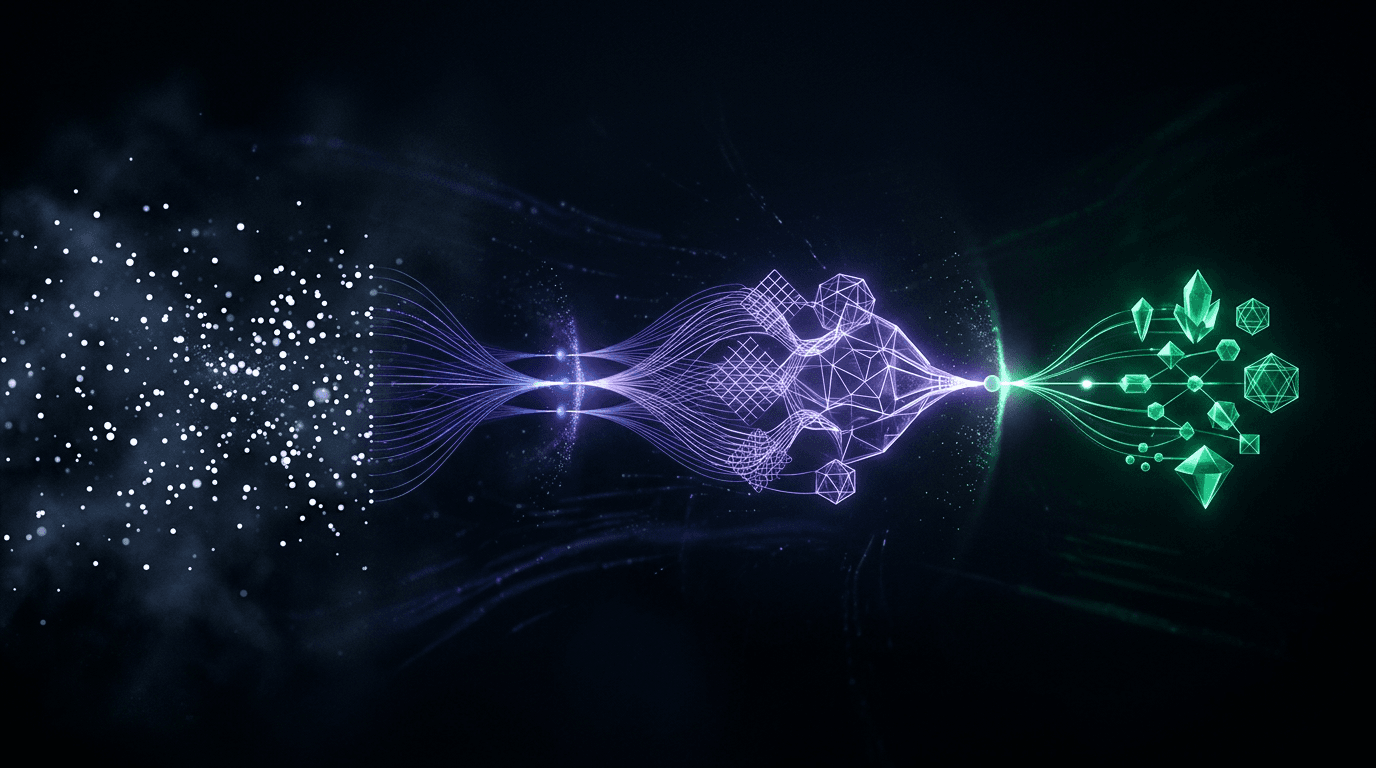
The Neuro-Symbolic mode is the primary discovery pathway for fusion research, where neural encoding captures the high-dimensional, nonlinear relationships in plasma diagnostic data before symbolic distillation extracts interpretable scaling laws and transport equations. Symbolic discovery produces the closed-form confinement scaling relations and reactivity equations required for reactor design. The Causal mode (powered by CDE) maps causal relationships between plasma control parameters and confinement performance, identifying which actuator adjustments genuinely drive improved confinement versus those that merely correlate with favorable conditions. The Neural mode handles three-dimensional magnetic field and flux surface data.
Symbolic
Discovers closed-form governing equations — the explicit mathematical laws that describe how systems behave. Produces human-readable, interpretable formulas.

Neural
Deploys physics-informed architectures for high-dimensional, symmetry-rich data where closed-form solutions may not exist.
Neuro-Symbolic
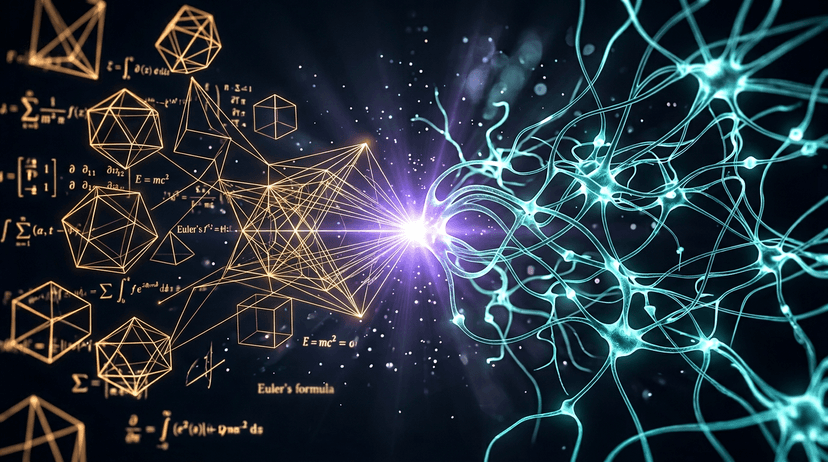
Combines neural encoding with symbolic distillation — learns complex representations first, then extracts interpretable governing laws from those representations.
CDE
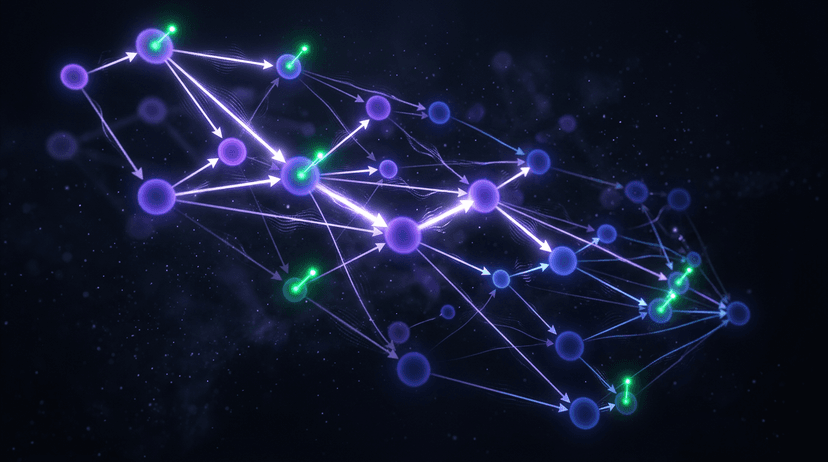
The Causal mode, powered by ARDA's Causal Dynamics Engine (CDE), discovers true cause-and-effect relationships from observational data — identifiable causal graphs, regime classifications, and intervention predictions.
Typed Scientific Claims
What ARDA discovers
Every discovery ARDA produces is a typed scientific claim — not a black-box prediction, but a governed, reproducible, auditable piece of scientific knowledge with full provenance.
- Plasma confinement scaling laws
- MHD stability governing equations
- Tokamak transport dynamics
- Neutron flux distribution models
- Reactor kinetics equations


Governed Discovery
Built for regulated industries
Every discovery ARDA produces carries governance metadata: a Truth Dial setting that controls the confidence threshold, an evidence ledger entry with deterministic replay recipe, and negative control results including bootstrap stability, out-of-distribution testing, and feature shuffle validation.
For nuclear & fusion energy, this means every scientific claim is auditable, reproducible, and suitable for regulatory submission, peer review, or board-level decision-making. The governance stack is not optional — it is embedded in every discovery run.
Same sector
Related industries
Oil & Gas
Discover reservoir dynamics, flow equations, and production decline laws from well data with full governance for regulatory compliance.
ViewRenewable Energy
Discover the physical laws governing renewable energy systems — from wind turbine performance to solar panel degradation dynamics.
ViewPower Systems & Grid
Discover governing dynamics of power grid behavior — load flow equations, stability boundaries, and cascading failure mechanisms.
ViewMining & Resource Extraction
Identify governing geomechanical laws and extraction dynamics from drilling, sensor, and production data.
ViewGet started
Start discovering with ARDA
Whether you are exploring nuclear & fusion energy data for the first time or scaling an existing research programme, ARDA adapts to your workflow. Create an account, connect your data, and let the engine surface the governing laws hidden in your experiments.